My Decade-Long Journey to Interactive Fiction


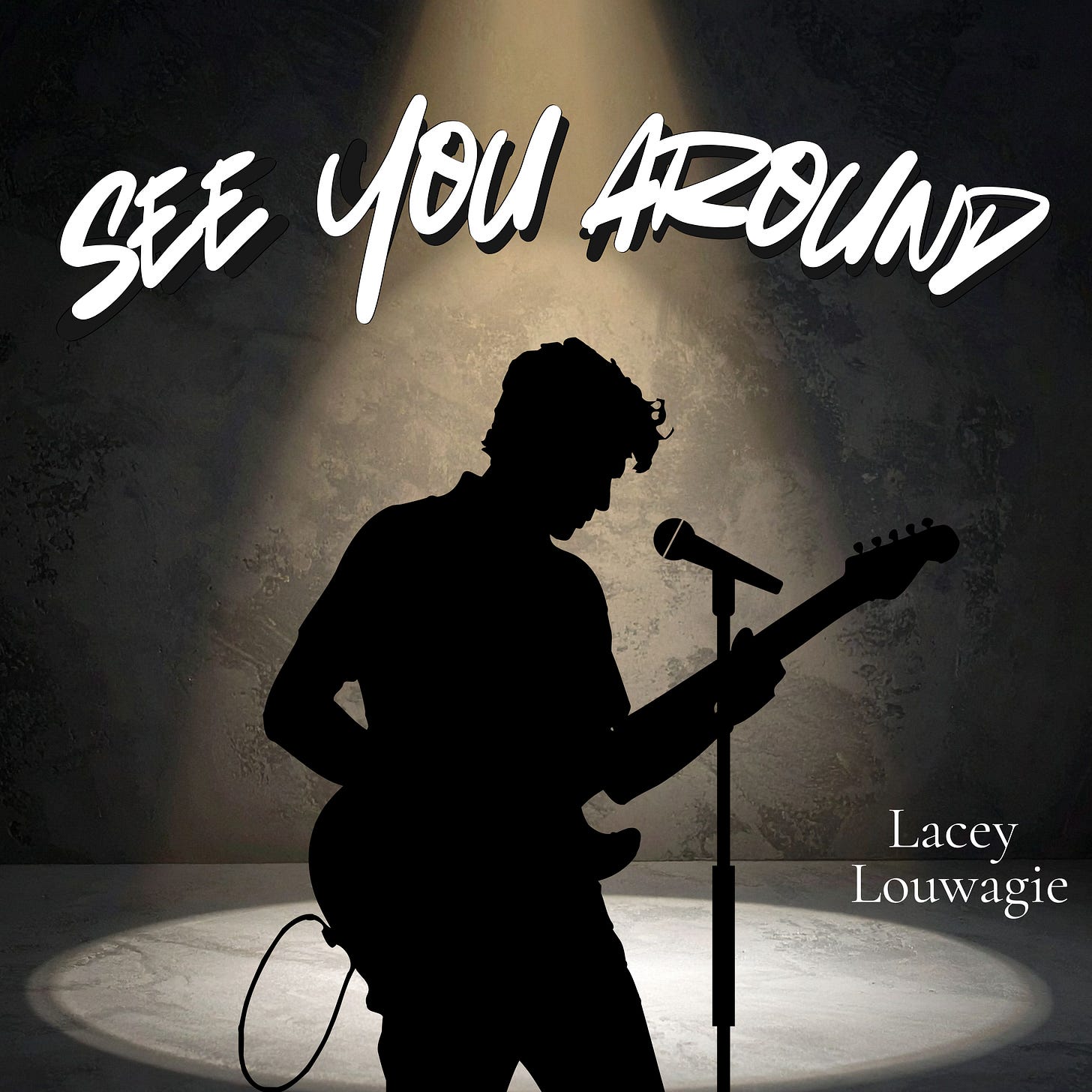
Last week, my short story, “See You Around” went live on the Interactive Fiction Competition website.*
Almost exactly ten years ago, I sat on a metal folding chair in an upstairs room of the Brookings Public Library to attend a session about “non-linear” storytelling by author Steven Wingate as part of the South Dakota Festival of Books. I had no idea what to expect.
Wingate talked about his interactive, multimedia memoir, Daddy Labyrinth, which used a linking, branching structure to mimic the twisting passages of memory. He talked about the possibilities inherent in non-linear stories, where branching structures can allow the reader to move back-and-forth through time, to shift between character perspectives, or to affect the outcome of the plot. He said the stories rested somewhere in the space between game and literature, that the whole point was experimentation. He told us about programs that made writing and coding this type of story easier, such as the free-to-use Twine.
I took furious notes (which I’ve since lost), leaving the session more excited about writing than I’d felt in years. I couldn’t stop talking to my husband about it. I wanted to take Wingate out to dinner and pick his brain. (Unfortunately, I never followed through on this desire and he’s since left South Dakota.)
Earlier that same morning, we had been up early for an appointment with the fertility clinic. My husband and I had been trying to get pregnant for almost two years. It felt good to have something else to focus on. I downloaded Twine, started experimenting with a diary-type piece about infertility. I decided that I would do National Novel Writing Month (NaNoWriMo) that November and try my hand at an interactive fiction novel using characters I’d wanted to find a way to write about for years. Interactive Fiction seemed to give me the “in” and the “structure” I might need for storylines, relationships, and characters that were as sprawling as epic fantasy “without the fantasy” (my husband’s characterization of the type of work I’m doing now, which includes character spreadsheets and constant consultation of calendars spanning from 1995 to now.)
Doing NaNoWriMo again would give me something to be excited about. I saw exploring this new direction for my fiction as my “consolation prize” for the baby that was feeling more out of reach with each passing month.
On November 1, 2016, I started writing my first interactive fiction novel.
On November 5, I got a positive pregnancy test.
In a haze of first-trimester fatigue, brain fog, and nausea, I kept writing the novel. I dragged myself through the requisite 2,000-ish words per day, closing my laptop with finality and gratitude each time I made my quota. Doing NaNoWriMo during early pregnancy was a terrible idea. When I hit 50,000 words, the story was not finished, but I was. Finally I was done with the commitment I’d made to the damn thing. I decided preemptively it was probably the worst piece I’d ever written and didn’t look at it again until 2025. By then, I had two sons and had produced a few spurts of short writing—blog posts, a short story, a novella. But my writing self had mostly been shoved into a corner to make room for the emergence of Mom.
In 2025, my youngest would start Kindergarten. I would go back to paid work. And I would have brain space and time to write again. I started thinking about my abandoned interactive fiction journey. I picked up the novel, read through it in two nights. It wasn’t as terrible as I had assumed. Nor was it a standalone. It would be part of a series. I would do NaNoWriMo again (now rebranded Novel November), and I would write another interactive fiction novel set within the same world as the first.
I got back in touch with a friend who had created with me in this world when we were younger. She started exploring her characters again. She told me she felt more like a writer than she had in years. I did, too. We started sharing rough drafts, ideas, and inside jokes, feeding off one another’s creativity to produce new work.
While I revised the novel during my structured daytime writing sessions, I started jotting down scenes about other characters in a notebook dedicated to this particular writing ecosystem. Then I admitted to myself that I wasn’t just messing around, that I was in the process of writing something new. My scenes moved from the notebook to Scrivener, my writing software. I still didn’t know what the hell I was building, but I started taking it more seriously. Non-linear, disjointed, ideas exploding like popcorn that might land on the floor or might be gathered into a story. Last spring, I realized that what I thought might eventually become a novel was instead a collection of mini-arcs that could be read independently as short stories. I started polishing the scenes that would become “See You Around” with the goal of submitting to IFComp and using the shorter piece to become more comfortable with coding in Twine before I took on the more ambitious project of coding the novels.
As I’ve been writing this, I’ve realized my own writing life over the last two and a half decades has been its own branching narrative.
To explore dystopia and post-apocalyptic writing, click here.
To explore YA writing, click here.
Click here for fairy tale retellings.
Click here to explore short stories.
Click here for non-fiction writing about parenthood.
Click here to follow the path of interactive fiction.
Each writing path I’ve embarked upon has lasted several years, and each time I thought I’d discovered the lane I would continue to travel in. But I love to stretch myself as a writer and each path has been an authentic exploration of something I’m passionate about. I don’t know how long I’ll be writing interactive fiction, if I’ll return to my previous writing paths, or if there’s something on the horizon ten years down the line that isn’t even on my radar now. So it feels strangely fitting to be writing in a genre where path-jumping isn’t just OK, it’s expected.
I think I’ll stay a while.
*As a newcomer on the scene, my goal is not to have my piece sit in last place on the site for decades to come. To that end, I’d greatly appreciate any reading/rating of it. To get to it more quickly from the main page, you can search in page for “See You Around” or “Lacey Louwagie.” It takes about an hour to read if you follow all the links. The competition closes on October 19th.